


Great service is important, but it doesn’t guarantee that a customer will remember your company months—or years—after they work with you.
That can be a particular challenge for businesses whos customers don’t require their services on a regular basis. A contractor completes a remodel project, an accountant manages seasonal taxes, a realtor assists in a home sale. While there is no obvious reason to be in contact again for a long time, the question becomes:
When that customer eventually needs the same or similar service again, the question is simple:
When that customer eventually needs the same or similar services again, will they remember your company—or start a new search?
Staying memorable between jobs doesn’t require constantly advertising to past customers. In fact, too much sales communication can have the opposite effect. The goal is to maintain the relationship with occasional, useful or thoughtful contact so your business remains familiar when the customer needs you again.
Why Good Customers Forget Good Companies
Most customers are not intentionally forgetting you.
They are simply busy.
A homeowner may have used an excellent plumber three years ago but no longer remember the company name. Someone may have loved the contractor who remodeled a kitchen but lost the business card. A customer may remember that the service was good without remembering exactly who provided it.
That is especially common in businesses with a long gap between purchases.
For companies such as contractors, HVAC businesses, plumbers, attorneys, electricians, roofing companies, accountants, realtors and many other professional and service providers, customer retention often depends partly on remaining recognizable between transactions.
You don’t necessarily need the customer to think about your company every month.
You just want your name to feel familiar when the need for you and your services returns.
Stay in Touch Without Constantly Selling
There is an important difference between staying visible and constantly asking for another sale.
Most people don’t want frequent promotional messages from a company they used once. But occasional contact that feels useful, relevant or appreciative can keep the relationship alive without becoming intrusive.
Depending on your business, that could include:
- a helpful seasonal reminder
- an occasional email with genuinely useful information
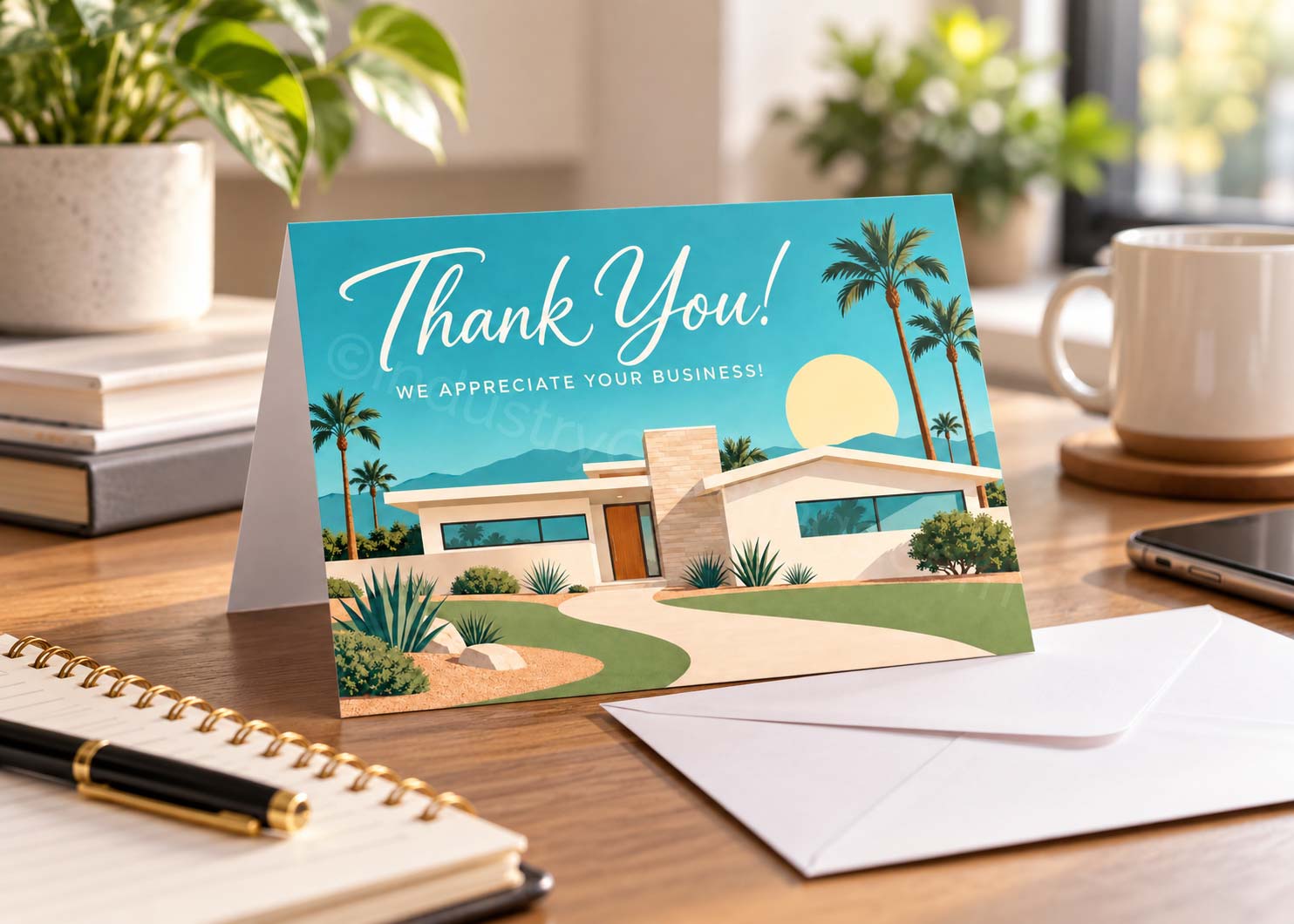
- a thank-you card after a completed project
- a service or maintenance reminder
- a holiday or seasonal greeting card
- an acknowledgement for a referral
- a check in after a significant project
The purpose of every communication does not have to be, “Buy something from us today.”
Sometimes the value is simply reminding the customer:
We’re still here, and you already know us.
Give Customers a Reason to Remember Your Name
A business name is easier to remember when it is associated with a positive experience.
That means your customer-retention efforts should reinforce the relationship rather than feel like another advertisement.
For example, a thank-you after a completed job reinforces appreciation.
A maintenance reminder can be useful.
A holiday greeting can create a positive impression without requiring the customer to make a purchase.
A note acknowledging a referral tells the customer that their recommendation was noticed and appreciated.
These small touches help connect your company name with something more meaningful than another sales message.
Physical Mail Can Create a Different Kind of Impression
Most businesses communicate digitally because it is fast, inexpensive and convenient.
Email absolutely has a place in customer communication.
But physical mail offers something different: it has to be physically handled.
A customer may quickly scan (and delete out of habit) dozens of emails in an inbox. And many email providers have filters such that your email may never even make it into their inbox. But a mailed card arrives separately. It stands out and is recognizable from the bills and junk mail received each day. A well-designed greeting card is opened, displayed for an extended period, and often shared with other people in the office or home.
That does not mean every customer communication should be mailed.
It means printed communication can be useful when you want a particular message to feel more personal than a routine email or promotion.
A business greeting card can work especially well for occasions when the message is about appreciation, goodwill or maintaining the relationship rather than making an immediate sale.
Holiday Greetings Are a Natural Reason to Reconnect
One reason businesses use holiday cards for customer retention is that the season provides a natural reason to reach out.
You don’t need to invent a promotion.
You don’t need to tell the customer that it is time to buy something.
You can simply thank them for their business and wish them well.
For a company that completes one-time projects or provides services only occasionally, that annual contact may be particularly useful.
A homeowner who has not needed a contractor, plumber or electrician since the last project gets another reminder of the company name.
A former real-estate client sees the agent’s name again.
A professional-services client is reminded of the relationship before the next time that service is needed.
The card is not necessarily intended to produce an immediate sale.
Its job may simply be to help ensure that when the need comes back, your business does too—into the customer’s mind.
Make the Communication Feel Like It Came From Your Company
Generic marketing is easy to ignore.
Customer-retention communication works better when the recipient can quickly recognize who it came from.
That might mean including your company name, logo, staff signatures or a message that reflects the way your business normally communicates with customers.
For greeting cards, even the artwork itself can help.
A contractor sending a card that subtly reflects construction, a landscaper sending something related to lawn care, or an automotive business choosing a design its customers immediately associate with the industry can make the greeting more memorable. Industry specific greeting cards ensure your client connects the card with you and your business or the services you provide.
The goal is not to turn the card into an advertisement.
It is to make sure the recipient knows who remembered them.
Don't Forget Customers After the Job Is Finished
Many businesses put most of their marketing effort into finding new customers.
While that feels like the right thing to do, past customers already know something that prospective customers do not:
They know your work.
If they had a positive experience, earning their business again may be easier than starting from zero with someone who has never heard of you.
Past customers can also become referral sources. Even if they don’t currently need your service, they may know someone who does.
That makes the period between jobs important.
The relationship does not have to end when the invoice is paid.
A small amount of thoughtful follow-up can help keep that relationship active.
Different Businesses Need Different Follow-Up Schedules
There is no single communication schedule that works for every company.
A lawn-care or pool-service business may already see customers regularly and need less additional contact.
A contractor who completes a major project may have a much longer gap before the customer needs another service.
An HVAC company might have seasonal reasons to communicate.
A realtor may want to maintain relationships for years between transactions.
An accountant may already have a natural annual cycle.
Think about how often the average customer realistically needs what you provide.
The longer the gap between purchases, the more important an occasional reminder can become.
That doesn’t mean contacting people more often.
It means making the contacts you do have more intentional.
Customer Retention Doesn't Have to Be Complicated
A customer-retention plan can be very simple.
You might decide that past customers receive:
After the job: a physical thank-you card or phone call.
During the year: one useful reminder or appropriate follow-up.
During the holidays: a customer-appreciation or seasonal greeting.
That alone creates several positive contacts after the original transaction without overwhelming the customer.
A more complex business may use email, direct mail, social media, maintenance reminders and other communication together.
The specific mix matters less than consistency.
If your company disappears completely as soon as the job is finished, you are leaving the customer's future memory largely to chance.
The Goal Is Familiarity
Customer retention is not only about discounts, loyalty programs or frequent promotions.
For many service businesses, one of the most valuable outcomes is much simpler:
When a previous customer needs your service again, your company is the one they remember.
Thoughtful follow-up helps maintain that familiarity.
Sometimes that means useful information.
Sometimes it means saying thank you.
Sometimes it means sending a holiday greeting with no sales message at all.
You don’t need to be constantly in front of customers.
You simply want to remain familiar enough that when the next job comes along, they don't have to wonder who to call.